From Ancient Wonders to Tropical Shores
Sri Lanka is a tropical island paradise located in the Indian Ocean. Despite its compact size, the country offers an incredible diversity of experiences.
Geology
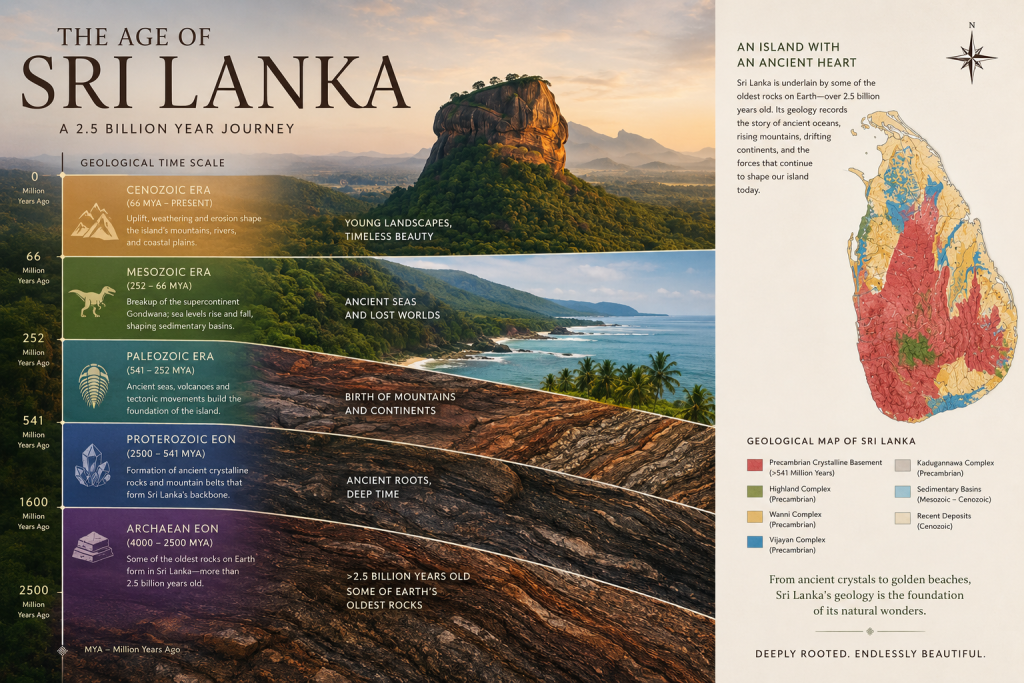
Sri Lanka is a fragment of the ancient supercontinent Gondwana and is underlain by some of the oldest rocks in South Asia. Approximately 90% of the island consists of Precambrian crystalline rocks formed between 550 million and 3 billion years ago.
The island’s geology is dominated by high-grade metamorphic rocks such as gneiss, quartzite, marble, and charnockite, which form the rugged central highlands and much of the surrounding terrain. Over millions of years, weathering and erosion have shaped Sri Lanka’s mountains, plains, rivers, and coastal landscapes.
Sri Lanka is also renowned for its rich mineral resources, including gemstones, graphite, mineral sands, limestone, and clay deposits. The famous gem fields around Ratnapura were formed through geological processes that concentrated precious minerals over vast periods of time.
This ancient geological foundation has played a vital role in shaping the island’s biodiversity, landscapes, and human history.
Topography
Sri Lanka’s topography is characterized by a dramatic central mountainous massif surrounded by rolling plains and a coastline stretching approximately 1,340 km. The island rises from sea level to 2,524 metres at, its highest peak.
The central highlands give rise to 103 major rivers, the longest being the ****, which flows for about 335 km. Sri Lanka is also home to more than 430 recorded waterfalls, including some of the highest and most spectacular in South Asia.
From misty mountains and deep valleys to forests, wetlands, lagoons, and coastal plains, Sri Lanka’s diverse topography creates an extraordinary range of landscapes, ecosystems, and natural attractions within a compact island.
Climate and Environmental Zones
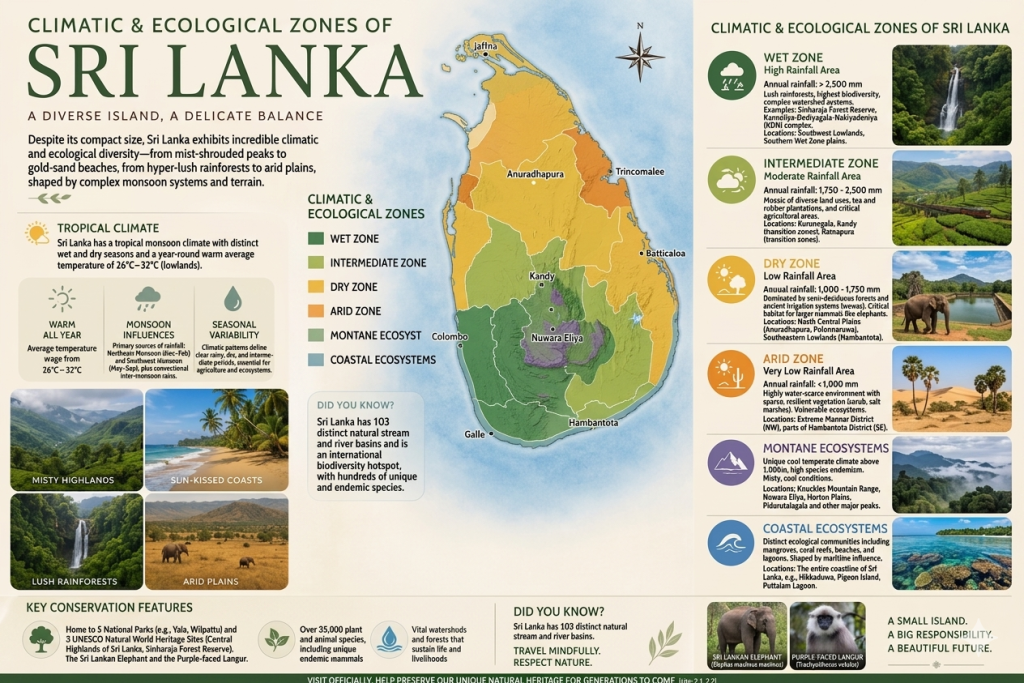
Despite its small size, Sri Lanka possesses remarkable climatic and environmental diversity. The island is broadly divided into three climatic zones: the Wet Zone, Dry Zone, and Intermediate Zone, shaped by elevation and the southwest and northeast monsoon systems.
Annual rainfall ranges from less than 1,000 mm in parts of the Dry Zone to over 5,000 mm in the southwestern highlands. Temperatures are generally tropical, averaging 26–32°C in the lowlands, while the central highlands enjoy a cooler climate.
These climatic variations support a wide range of ecosystems, including tropical rainforests, montane cloud forests, dry monsoon forests, grasslands, wetlands, mangroves, and coastal habitats. This environmental diversity has made Sri Lanka one of the world’s most important biodiversity hotspots.
Prehistoric Sri Lanka
Sri Lanka’s prehistoric heritage dates back more than 48,000 years. Archaeological discoveries from caves and open-air sites reveal the lives of the island’s earliest hunter-gatherers, known as the Balangoda People.
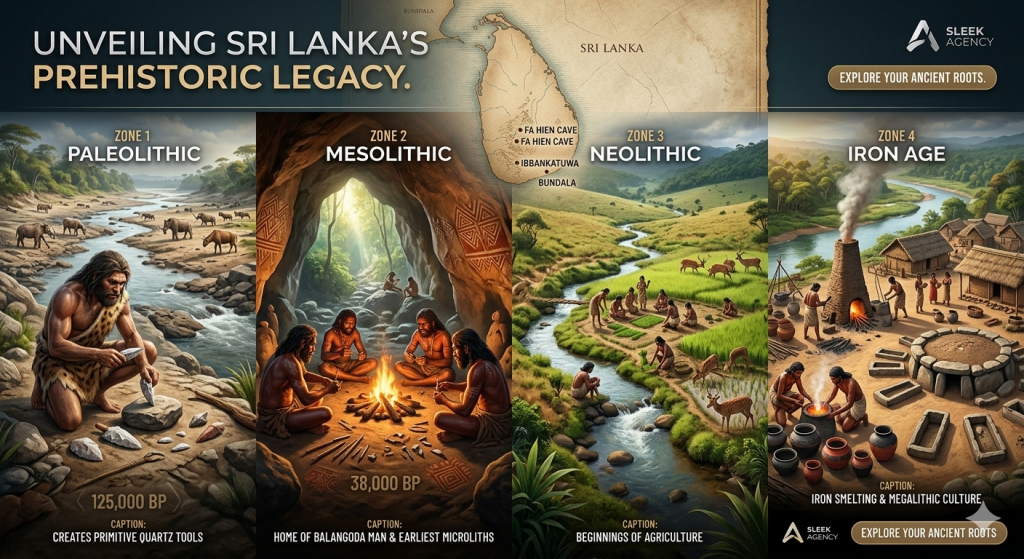
- Fa Hien Cave (Pahiyangala) – c. 48,000 years ago: human remains, microlithic stone tools, bone tools, and evidence of rainforest adaptation.
- Batadomba-lena – c. 36,000–28,000 years ago: human skeletons, stone tools, ornaments, and food remains.
- Belilena Cave – c. 30,000 years ago: human burials, stone tools, and animal remains.
- Alu Lena Cave – prehistoric occupation with stone tools and evidence of cave habitation.
- Pathirajawela (Ambalantota) – c. 25,000 years ago: one of South Asia’s oldest coastal open-air settlements, yielding stone tools and evidence of prehistoric coastal life.
- Buttala Region – prehistoric stone tools and settlement evidence indicating human occupation in southeastern Sri Lanka during the Late Stone Age.
These sites demonstrate the remarkable adaptability of Sri Lanka’s earliest inhabitants and provide valuable insights into human prehistory in South Asia.
History
Sri Lanka’s human story stretches back more than 48,000 years, making the island one of South Asia’s most important archaeological landscapes.
Research from Horton Plains suggests that prehistoric communities were already managing their environment between 15,000 and 10,000 years ago, providing some of the earliest evidence of human landscape modification in South Asia.
During the Protohistoric Period (c. 1000–300 BCE), Sri Lanka witnessed the emergence of agriculture, iron technology, trade, and organized settlements. Important sites such as Belihuloya, Pomparippu, Ibbankatuwa, and Salgahawatta reveal the development of farming communities, megalithic burial traditions, and regional trade networks.
Excavations at Salgahawatta in Anuradhapura have uncovered evidence of one of South Asia’s earliest planned urban settlements, along with some of the earliest securely dated Brahmi inscriptions. These discoveries mark the transition from prehistory to recorded history and the rise of one of the ancient world’s great civilizations.
Today, Sri Lanka’s archaeological heritage offers a fascinating journey through tens of thousands of years of human history, innovation, and cultural development.
UNESCO World Heritage Sites
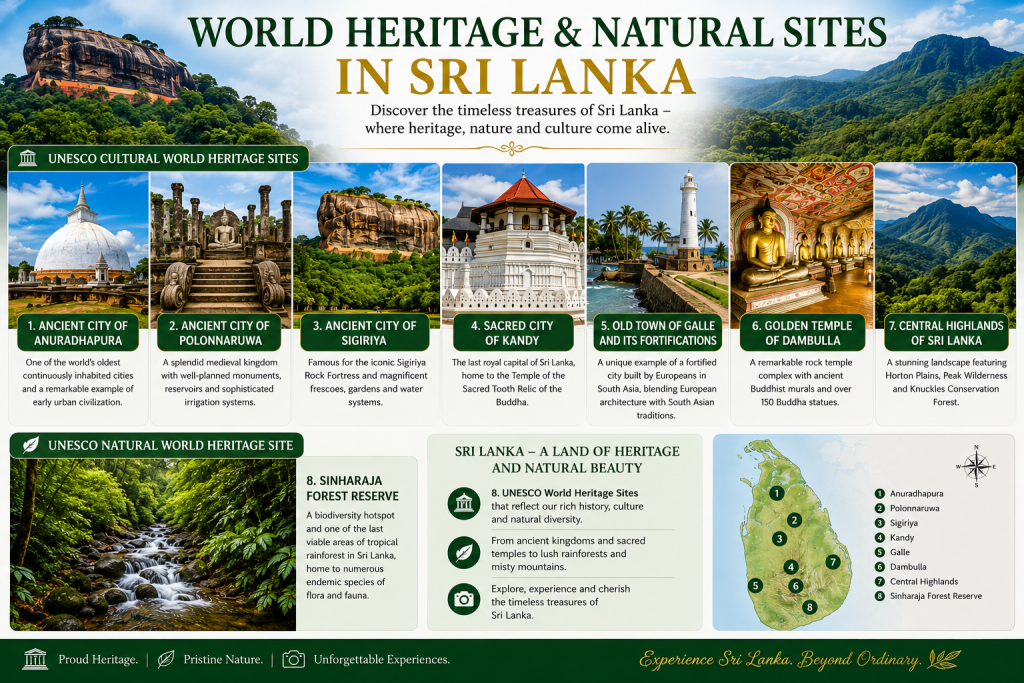
Explore ancient cities such as Anuradhapura, Polonnaruwa, Sigiriya, Dambulla, Kandy, and Galle, Also natural sites: Central Highlands (Horton Plains, Knuckles & Peak Wilderness)
Wildlife
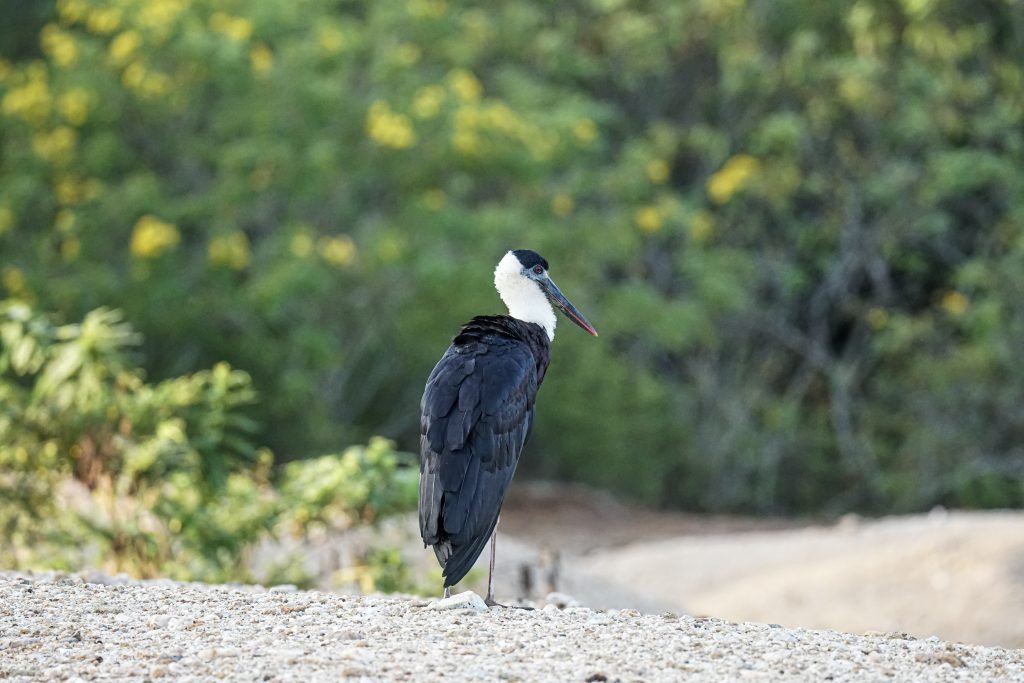
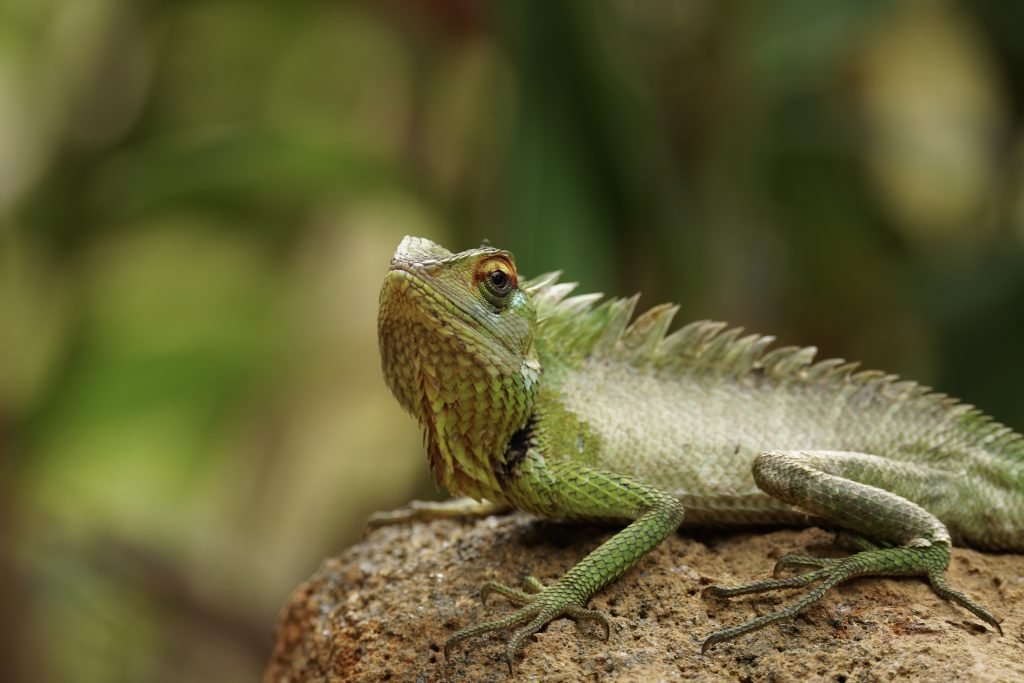
Sri Lanka is one of the best destinations in Asia for wildlife enthusiasts, offering opportunities to observe leopards, elephants, sloth bears, whales, dolphins, and over 400 bird species.
Nature and Landscapes
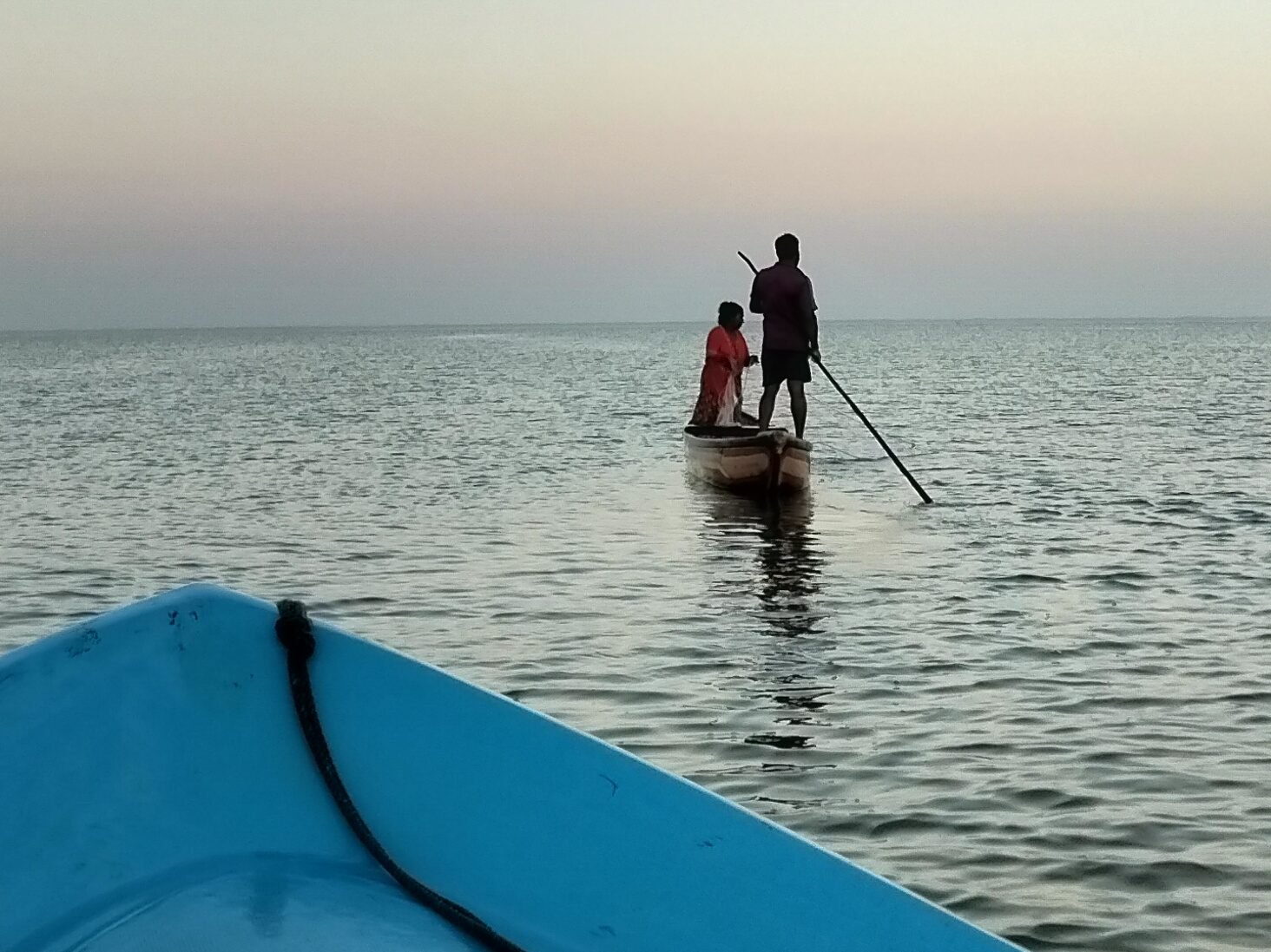
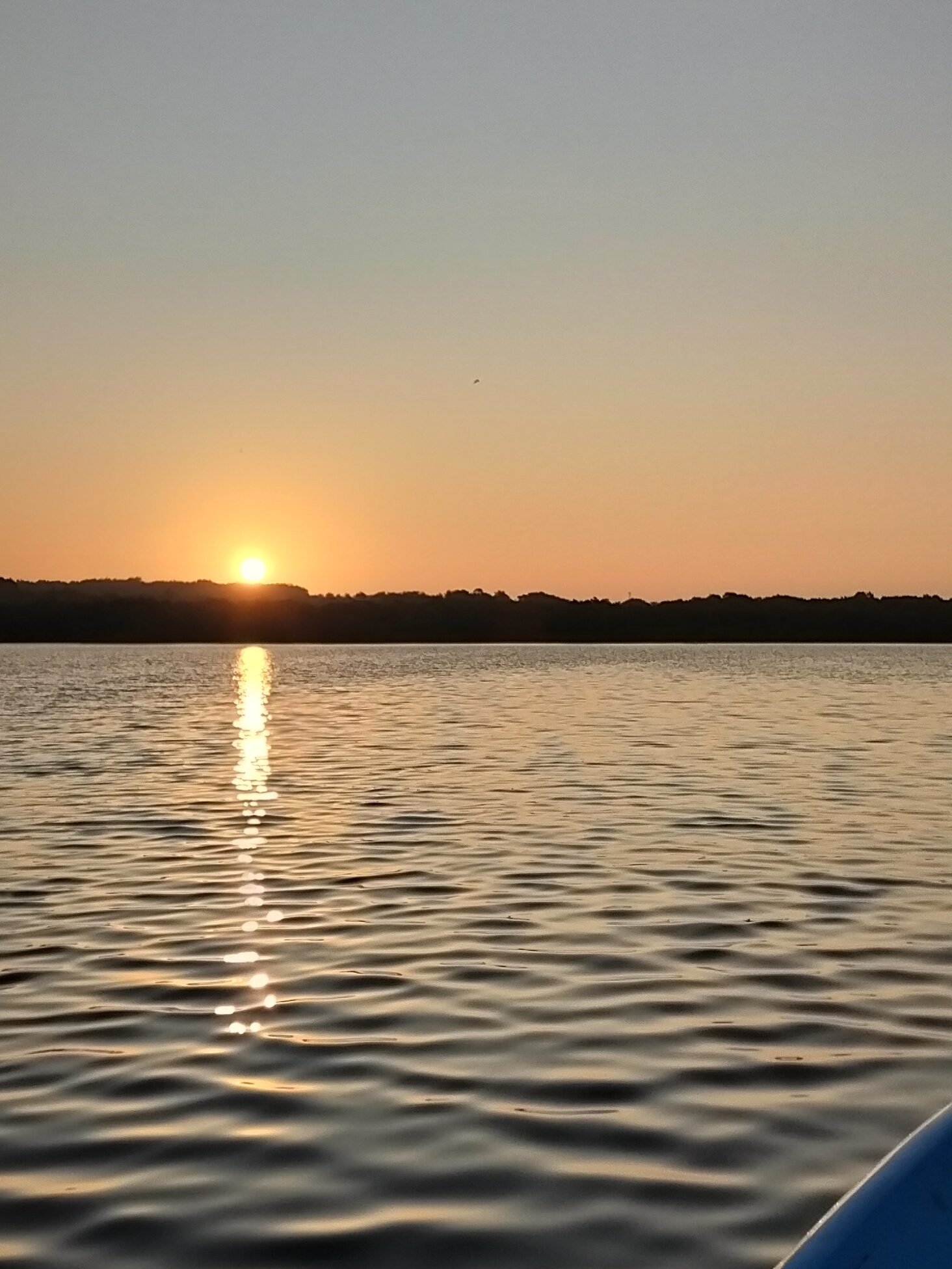
From the tea-covered hills of Nuwara Eliya and Ella to the golden beaches of the south coast, Sri Lanka’s landscapes are remarkably diverse.
Culture and Traditions
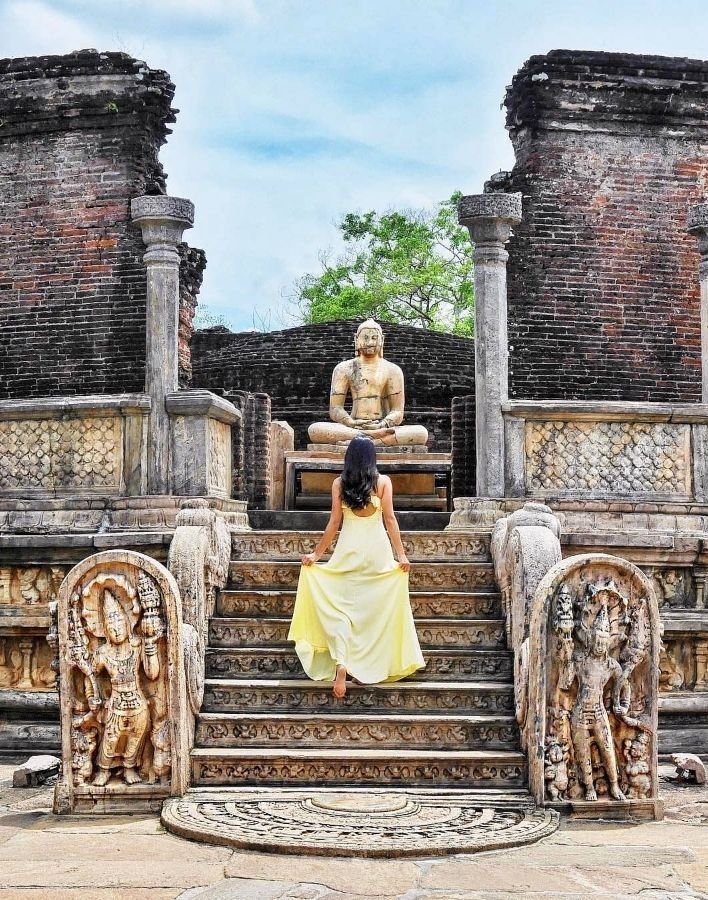
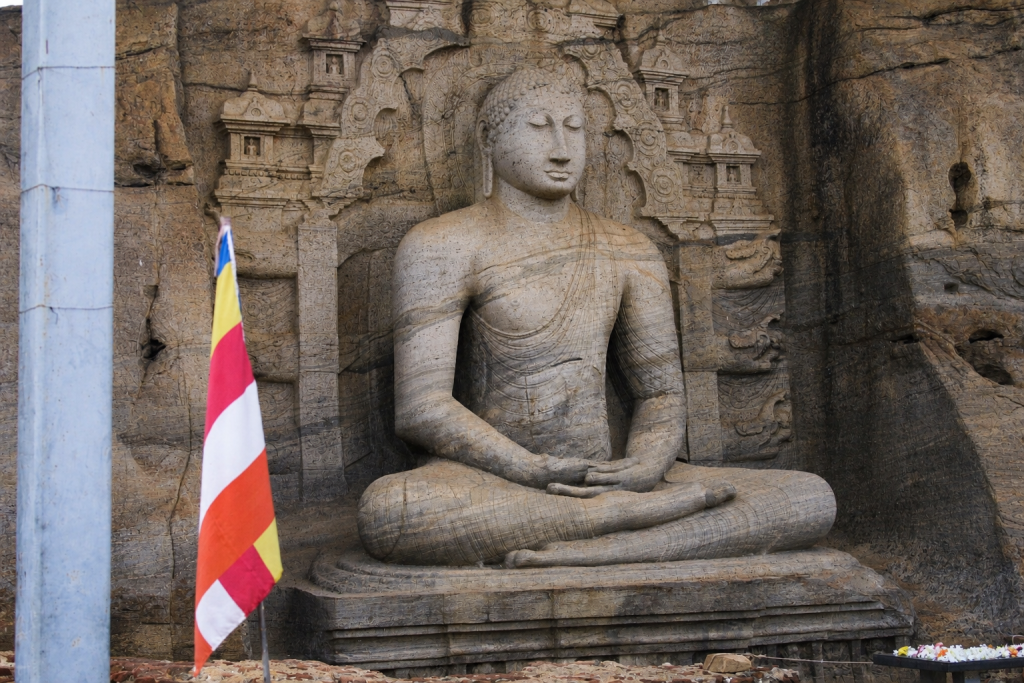
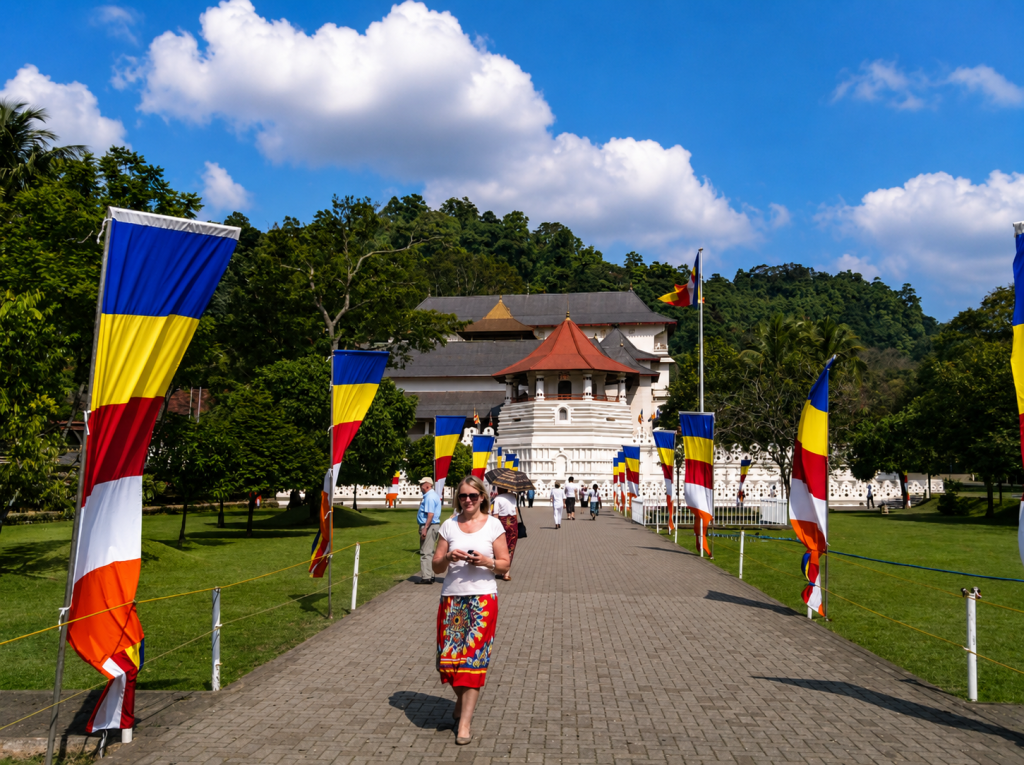
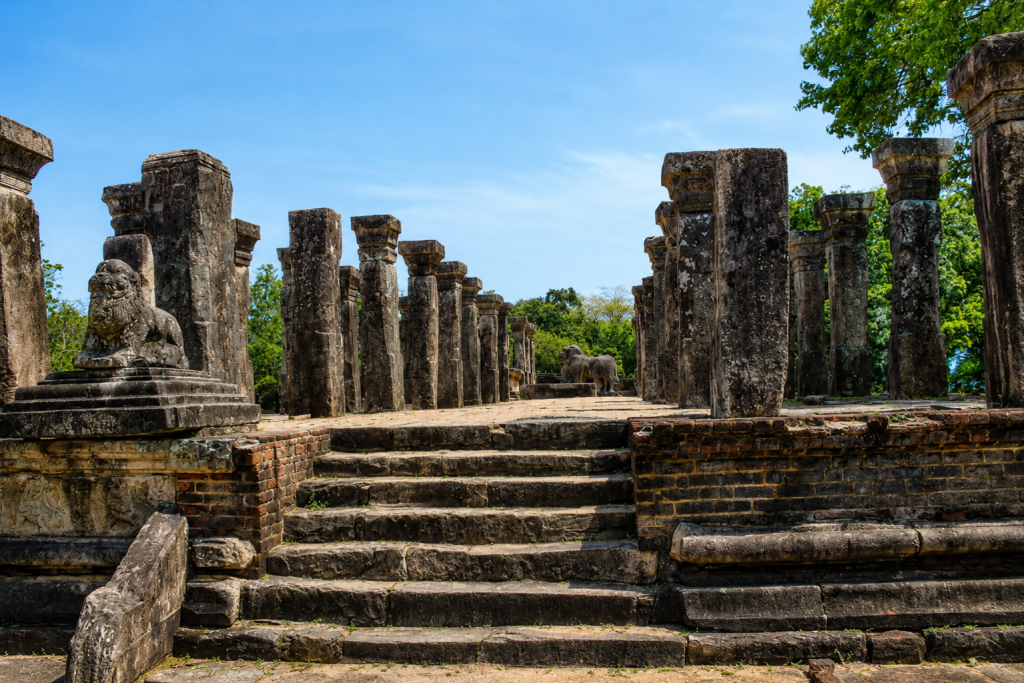
With over 2,500 years of written history, Sri Lanka is home to ancient temples, vibrant festivals, traditional arts, and a rich cultural heritage. Center of ancient Buddhist world and 1000 of archeological sites throughout the country.
Cuisine
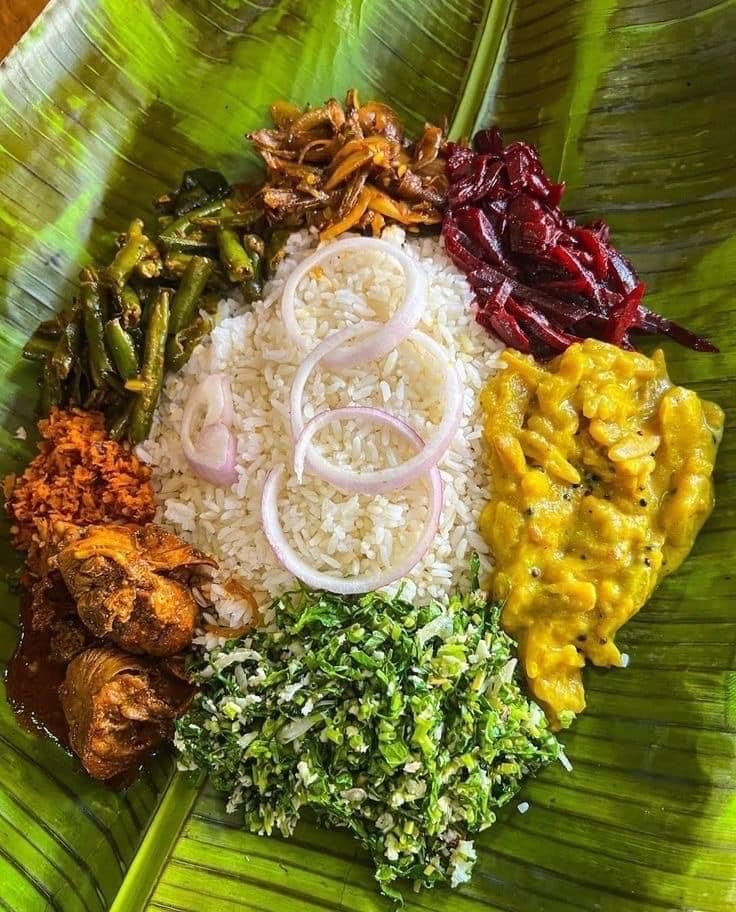
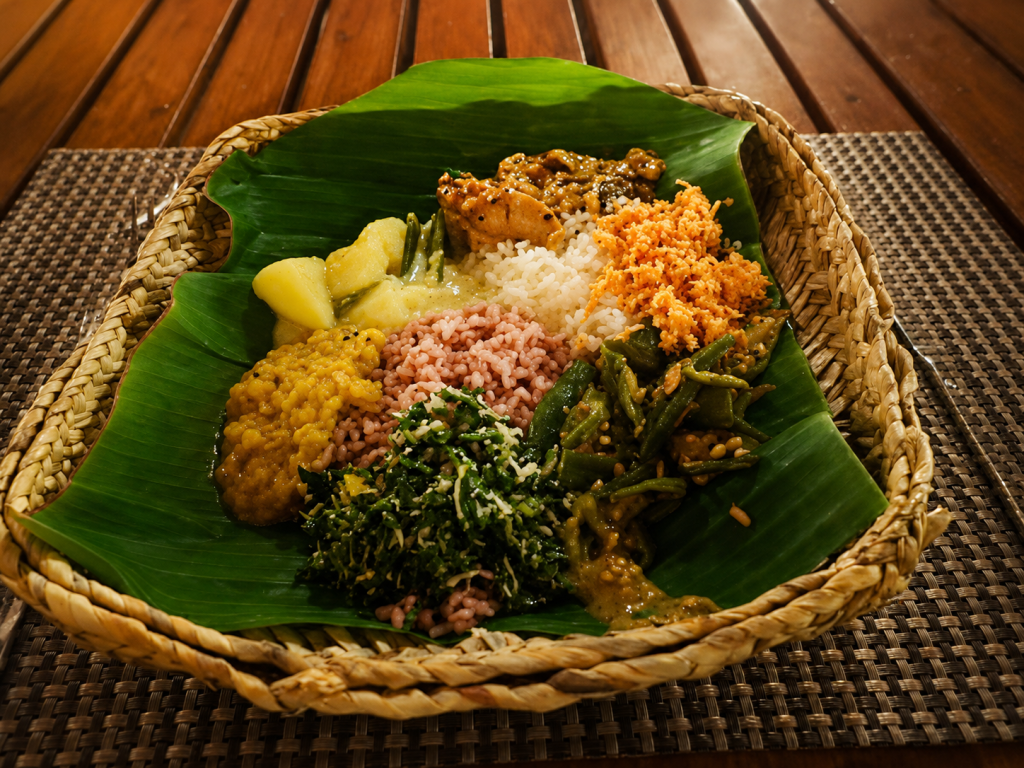
Sri Lankan cuisine combines aromatic spices, fresh ingredients, and unique flavors that create unforgettable culinary experiences.
Whether you are seeking adventure, relaxation, wildlife, history, or culture, Sri Lanka offers an experience unlike any other destination in the world.